The development of knowledge in the natural world brings the need to give a name and to order what it is known. As Linnaeus said, "If you do not know the name, also the knowledge of things dies."
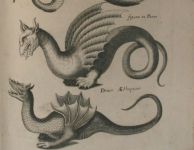
The attempts made during the 16th and 17th centuries at the classification of plants and animals, among which can be mentioned those of U. Aldrovandi, P. Belon, J. Dalechamps, C. Bauhin, etc., initially dedicated to the practical use of such organisms, and then found a scientific basis in the critical works of the same period that pave the way to modern classifications. This is demonstrated by the important works by Andrea Cesalpino (1525-1603), John Ray (1627-1705), Joseph Pitton de Tournefort (1656-1708), etc. Along the same lines we also find the comprehensive natural histories of Conrad von Gesner (1516-1565) and Jan Jonston (1603-1675). They are encyclopedic-style works, which, with their aim to "inventory" all available knowledge on natural history, constitute a sort of connection between ancient knowledge and new modern scientific perspective.
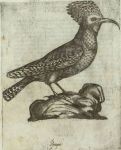
Sometimes these works are monographic, and are designed to illustrate animal categories linked to human activities such as in the case of Antonio Valli da Todi (1601) who wrote the first ornithological treatise in Italian where the species of birds of hunting interest are illustrated together with hunting techniques.
Then, in the eighteenth century Karl von Linné (1707-1778), makes his appearance and he finally kicks off modern taxonomy with the elaboration of a system for nature which is organically structured in consistent taxonomic categories.
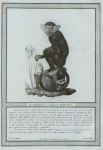
In the wake of the French naturalists fundamentally opposed to the Linnean theory, there are also publications, such as Natural History of the monkeys and maki ... by Huges (fl. 1815), which on one hand are advancing bold assumptions such as the continuity between the monkey and man but on the other hand linger on obsolete scientific models.
In any case, much theoretical reflection accompanies the progressive widening of the known geographical horizons and, indeed, it is stimulated by the proliferation of new natural specimens to study and classify, a phenomenon that becomes almost a fashion in the nineteenth century.
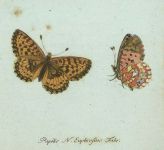
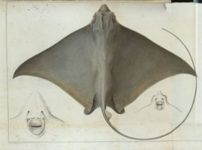
Scientists are participating in trips and explorations of which they report in more or less in detail their experiences and scientific results in large-scale works, in which are illustrated the botanical and zoological species identified. An exemplary such work is the Histoire Naturelle des Iles Canaries by Webb (1836-1850). These works no longer intend to represent the natural world in all its various expressions but acquire an ever more specialized and critical dimension.
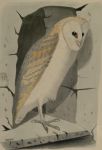
In parallel, including at local level, the attention focusses on the study of particular areas of the territory, there is a census of the species that live there, and we see the publication of detailed indexes and iconography to describe them. One such example is Giglioli's (1879-1906) Iconografia della avifauna italica.
In conclusion, as Leopardi wrote to Giordani in 1817, 'those who are not senseless are burning of seeing and knowing; the earth is full of wonders," and so science advances by virtue of this human capacity for curiosity, exploration and research.